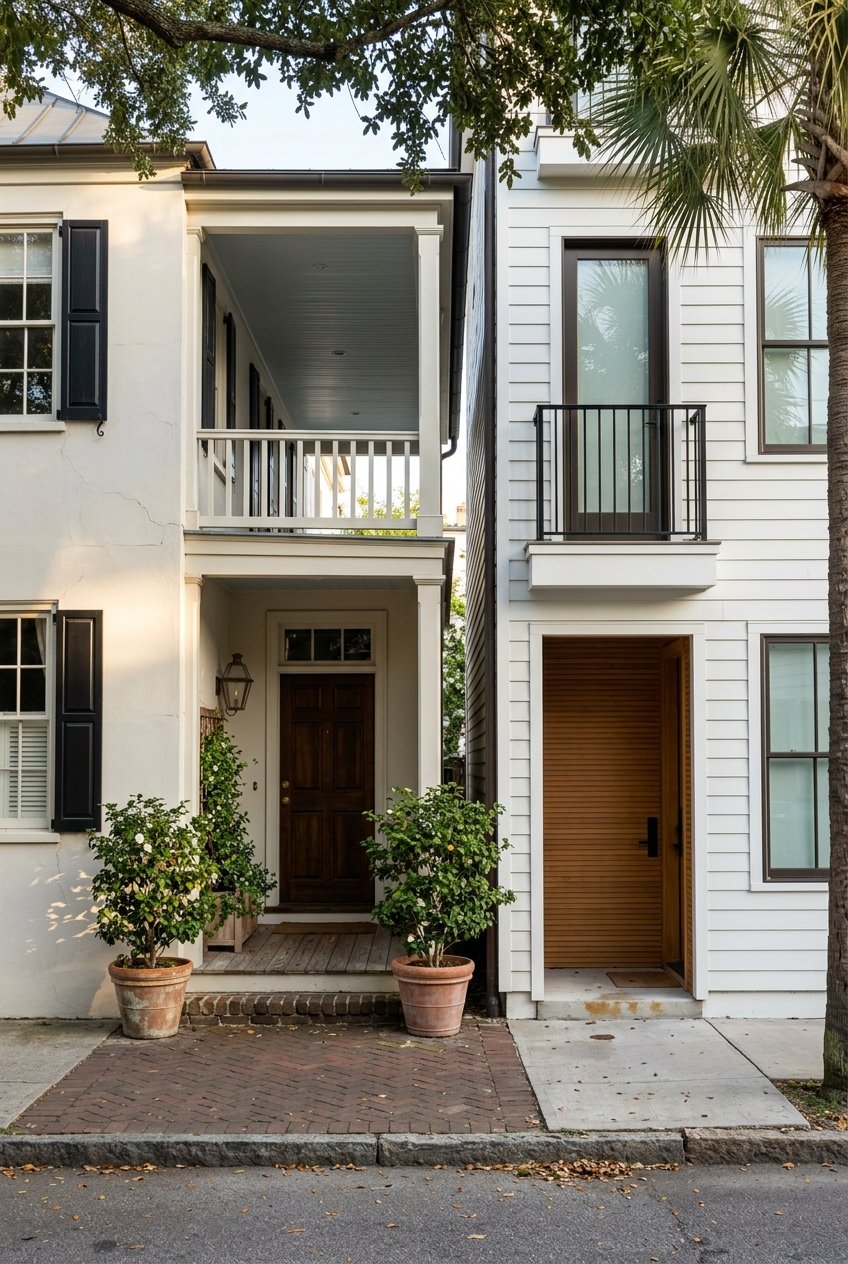
Choosing Condos Or Historic Homes In Downtown Charleston
June 4, 2026
June 4, 2026
If you are deciding between a downtown Charleston condo and a historic home, you are really choosing between two very different ownership experiences. Both can be compelling, but the right fit depends on how you want to live, how much complexity you want to manage, and how you think about long-term value. This guide will help you compare the tradeoffs clearly so you can move forward with more confidence. Let’s dive in.
Downtown Charleston is not a market where broad averages tell the whole story. Recent market snapshots show a downtown median sale price of about $1.14 million for the three months ending April 2026, while condo listings downtown sat around a $1.1 million median listing price. In nearby historic submarkets, median sale prices reached much higher levels, including about $2.65 million in the French Quarter and $3.5 million South of Broad.
That spread matters because resale value downtown often depends on micro-location, property type, and ownership structure, not just the broader city market. A lock-and-leave condo appeals to one buyer pool. A historic single-family home with architectural character appeals to another.
At a high level, condos and historic homes usually solve different problems. One tends to offer a more shared, rules-based ownership model. The other usually offers more direct control, along with more direct responsibility.
Here is the simplest way to think about it:
| Property Type | Often Fits Buyers Who Want | Main Complexity |
|---|---|---|
| Condo | Less exterior responsibility, shared upkeep, predictable building systems | Association rules, dues, insurance review, possible special assessments |
| Historic Home | Architectural character, more control, direct stewardship of the property | Exterior review rules, individualized maintenance, flood and insurance diligence |
Neither path is automatically easier. In downtown Charleston, each comes with its own paperwork, costs, and decision points.
In South Carolina, condos are governed under the Horizontal Property Act. That means a condo regime should have a recorded master deed or lease and bylaws that cover administration, voting, meetings, common elements, services, and how payments are collected.
For you as a buyer, that makes the condo decision more than a question of finishes or location. You are also buying into a governance structure, a budget, and a shared approach to maintenance and repairs.
Under the state framework, common elements can include the land, foundations, main walls, roofs, halls, lobbies, and stairways. Owners contribute on a pro rata basis to administration, maintenance, and repair of common and limited common elements.
In practical terms, that usually means you trade some owner-managed repair risk for recurring dues and the possibility of special assessments. That can be appealing if you want less day-to-day exterior responsibility, but you still need to understand exactly how the association is operating.
The South Carolina Department of Consumer Affairs recommends that buyers carefully review key association documents before purchase. This step is especially important in downtown Charleston, where older buildings, insurance costs, and maintenance planning can affect both financing and future resale.
Before you move forward, ask for:
That level of review matters. In the agency’s 2026 complaint report, top issues included covenant and bylaw enforcement, maintenance and repairs, and access to information or documents.
Insurance review is not just a formality for condo buyers. Fannie Mae requires condo projects to carry master property insurance at the project level on a replacement-cost basis, generally with no more than a 5% deductible.
If the master policy does not cover the inside of your unit or your interior improvements, you may also need HO-6 coverage. For a downtown Charleston condo, the association’s insurance file can affect your financing options now and your resale position later.
A historic single-family home downtown often gives you more direct control over the property than a condo. If you value architectural detail, privacy, and the ability to make more independent decisions about your home, that can be a major advantage.
That said, more control usually comes with more responsibility. You are typically taking on a more individualized maintenance plan, insurance review, and preservation-related due diligence.
In Charleston’s Old and Historic District, no structure may be erected, demolished, removed, or have its exterior architectural appearance altered until Board of Architectural Review approval is obtained. The city also notes that even projects without floor plan changes may still require a BAR application if the property is in a designated district.
That does not mean owning a historic home is unworkable. It means visible exterior work can be more process-heavy, and your renovation timeline may depend on approvals before work begins.
Charleston’s code also allows that repairs and renovations that do not alter exterior appearance, and are exempted by the administrative officer, may not need BAR approval. That distinction is important because it means the answer is often property-specific.
Before you buy with plans to update windows, porches, roofing, paint colors, or exterior details, confirm what district rules apply. It is much better to understand that process early than to assume every improvement will move on your preferred timeline.
Flood diligence is not optional in downtown Charleston. The City of Charleston states that all properties in the city are in a flood zone, even though not all are in FEMA’s Special Flood Hazard Area.
The city also makes clear that a standard homeowners policy does not cover flood damage. In addition, lenders may require flood insurance even outside the Special Flood Hazard Area.
For you, this means flood review should be a baseline step whether you are buying a condo or a historic home. You will want to verify flood zone status, review likely insurance costs, and treat flood coverage as part of your total carrying cost.
If you plan to make the property your primary legal residence, property tax classification may affect your annual cost. Charleston County says a home you own and occupy as your primary legal residence may qualify for the 4% legal residence assessment ratio.
That can materially change the carrying cost picture, especially at downtown price points. The county also notes a typical filing deadline of January 15, so this is something to plan for early if you expect to live in the property full time.
A condo often makes sense if you prefer a lower-maintenance ownership style and are comfortable with a shared building structure. You may appreciate having many exterior systems handled through the association rather than coordinating them on your own.
The tradeoff is that you need to be comfortable with dues, bylaws, association decision-making, and a more extensive document review process. In other words, you may gain convenience, but you are also stepping into a governance framework that deserves close attention.
A historic home often fits buyers who value architectural charm, direct stewardship, and more independence in how they live with the property. For many downtown buyers, that ownership experience is part of the appeal.
The tradeoff is that maintenance, flood planning, insurance, and approval pathways for visible exterior work usually sit more directly with you. If you like that level of control and are prepared for the added diligence, the fit can be excellent.
In downtown Charleston, the condo-versus-historic-home question is rarely about which option is universally better. It is usually about which kind of complexity fits you better.
If you prefer shared systems and a more structured maintenance model, a condo may align with your goals. If you prefer architectural character and greater ownership control, a historic home may be the stronger fit.
The key is to compare not just style and price, but also governance, insurance, flood exposure, review requirements, and long-term carrying costs. That is where a strategic purchase decision gets made.
If you want help weighing the tradeoffs between downtown Charleston condos and historic homes, Hayley Smith can help you build a clear buying strategy around lifestyle, risk, and long-term value.
Stay up to date on the latest real estate trends.



Discover how Hayley Smith can guide you through every step of buying or selling your home. Let’s achieve your real estate goals together with expertise and care.